Bed bug thermal remediation in Houston, TX provides definitive colony elimination by targeting insect physiology rather than relying on surface sprays. The common bed bug, Cimex lectularius , exhibits high resistance…
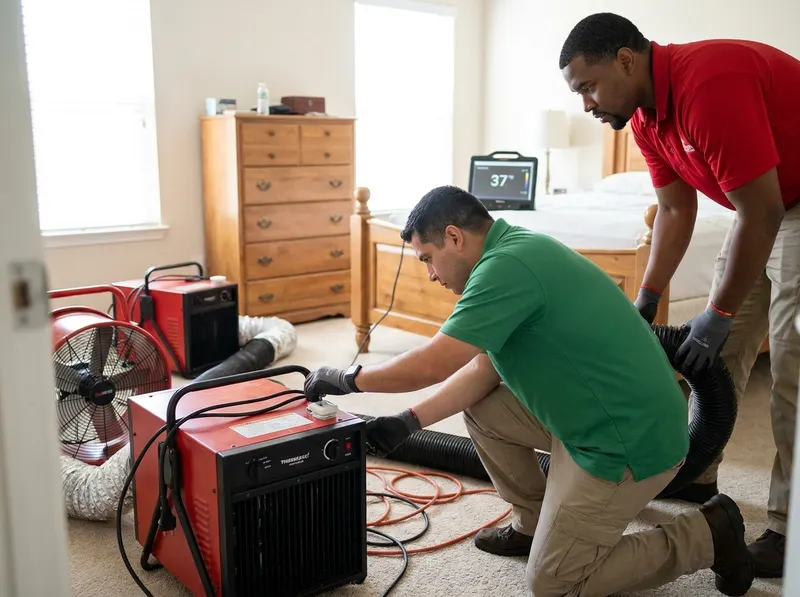
Bed bug thermal remediation in Houston, TX provides definitive colony elimination by targeting insect physiology rather than relying on surface sprays. The common bed bug, Cimex lectularius, exhibits high resistance to standard synthetic pyrethroids across Harris County. When ambient indoor temperatures reach 122°F (50°C), cellular protein denaturation occurs across all life cycles, including desiccation-resistant eggs. Unlike repeated retail chemical applications that scatter pests deeper into wall voids, convective heat systems push thermal energy past sheetrock and subflooring to halt reproduction instantly.
Treatment logistics depend heavily on property architecture and local microclimates. High ambient relative humidity, often exceeding 80% near Buffalo Bayou Park and throughout The Heights and Montrose, increases structural thermal mass. Industrial electric or indirect-fired heating units introduced into residences require steady electrical output or external mobile generators regulated under standards from the National Fire Protection Association. High-output air movers circulate thermal currents continuously, ensuring structural voids reach the lethal threshold without damaging household infrastructure.
Preparing a residence involves clear operational parameters. Heat remediation suits single-family homes in Memorial and Spring Branch, detached townhomes in West University Place, and medical housing near the Texas Medical Center. Heat treats complete structures without leaving long-term chemical residues, though residents must remove heat-sensitive items including wax candles, pressurized canisters, prescription medications, oil paintings, and vinyl blinds prior to unit activation. The trade-off centers on preparation intensity versus re-treatment frequency: thermal interventions require extensive same-day occupant departure, yet eliminate the need for weeks of disruptive chemical follow-up visits.
Multi-family complexes and older pier-and-beam foundations in River Oaks or Meyerland present specific heat-containment boundaries. In shared-wall environments, thermal technicians place perimeter monitoring equipment along party walls to verify pests do not disperse outward into untreated units. According to research published by the Pest Control Technology technical registry, continuous real-time wireless monitoring using digital thermal sensors ensures cold spots behind insulation are eliminated. Following structural cooling, technicians can apply a desiccant dust compliant with Environmental Protection Agency guidelines inside perimeter wall plates to block re-entry vectors.
Every job gets a firm, written price after a free on-site visit.
For standards, safe disposal, and service guidance on pest control services in Houston, TX, useful references include U.S. EPA, ENERGY STAR, U.S. Dept. of Energy, Consumer.gov, U.S. Census Bureau, and Google Maps. General consumer and small-business resources are available from USA.gov, Better Business Bureau, FTC Consumer Advice, U.S. Small Business Administration, and Ready.gov.
Tell us about your bed bug thermal remediation job in Houston and we'll send a clear, written quote, usually the same day.
 TerraVance Bug Removal